
作者归档:applepie
密码保护:Flight Planning & Performance Part1
727的两个最大落地重量
回复
727真的很奇怪,有两个最大落地重量。一个是襟翼30度154,500 lbs,另一个襟翼40度142,500 lbs。 明显襟翼30度的进近速度更大。在给727分类的时候,是用哪个重量确定的呢?询问了Brett,他是这样回答的:
Q: There are two landing configures(flap 30 and flap 40) and two max landing weights. The approach category is based on 1.3 times the stall speed in the landing configuration at maximum landing weight. Which weight or which flap is used when 727 was approved to be a category C for s-in landing? Are two configures approach speeds both within category C range? Which max landing weight is used in daily operation?
A:The definition of the approach category is based upon the maximum gross landing weight. We have two different limitations based on the flap settings, but the maximum certificate weight is based on Flaps 30 degrees, so that’s what we would base it on.(审定时使用的是襟翼30的落地重量) And that makes sense too – to be safe/conservative, we would want to base this on a higher speed and not a lower one. The stall speed with Flaps 30 will be higher than the stall speed at Flaps 40, so it also makes sense from that point of view to base this on Flaps 30. So, the Category C is based on 154,500 pounds with Flaps 30 degrees.
In daily operations, Flaps 30 would be used. You will see later in the course that it is VERY rare that we would want to use Flaps 40 degrees. This is helpful for extremely short runways because the runway weight limitations for landing would be better – the lower landing speeds mean we could stop faster, or stop in the same amount of runway with more weight. However, the extra drag with Flaps 40 means that the ability to go around and do a missed approach will be greatly harmed because of all of the extra drag, and the weight limitations for that will be MUCH lower at Flaps 40 – plus, we lose 12,000 pound from the structural limit as you have already seen. It has to be an extremely short runway to even think about this.( 只有当受落地场长限制的时候,才需要使用襟翼40 )
In practice, operators of the 727 basically never use Flaps 40 for those reasons, plus another – with the extra drag at Flaps 40 during the approach, the engines have to be at a higher thrust setting to make up for the extra drag. That additional noise makes compliance with Stage III noise certification all but impossible.(使用襟翼40还会造成噪音太大,平时运行几乎不使用襟翼40的最大落地重量)
密码保护:727 Aircraft Limitations
密码保护:727 Systems
密码保护:EOC 105 Test Results
密码保护:NTSB 830
密码保护:Part 121 Subpart U Dispatch & Flight Release Rules
密码保护:Part 121 Subpart T – Flight Operations
密码保护:Part 121 Operating Requirements: Domestic, Flag, and Supplemental Operations
密码保护:119.7 Operations Specifications (OPSPECS)
密码保护:Part 110 General Requirements
密码保护:Part 91 General Operating and Flight Rules
密码保护:Part 65 Subpart C
密码保护:FAR Part 1 – Defintions & Abbreviations
第一次飞330模拟机
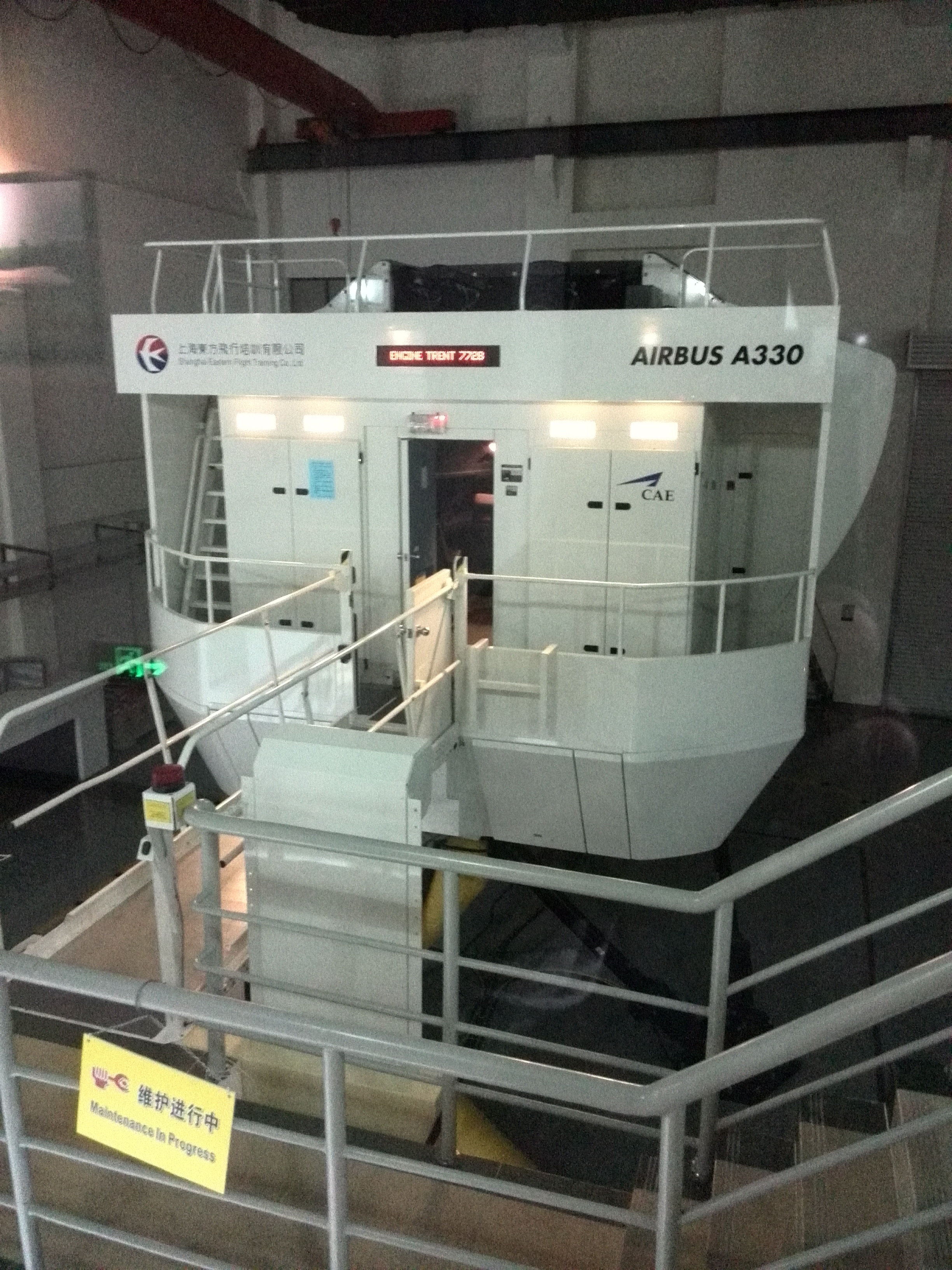
虽然模拟机的时间被安排在凌晨4点,人有点累,但是汪教员人很好。
飞了几个起落。330的和737比起来,真的是傻瓜机和单反的区别。
下次飞的时候,我觉得要加一点科目了。比如各种保护,导航管理,V1中断等等。光飞起落其实对签派意义不大。
磁差的纠结West is Best, East is least
These rules are often combined with the mnemonic “West is Best, East is least”; that is to say, add W declinations when going True headings to Magnetic Compass, and subtract E ones.
从真北至磁北,加西磁差,减东磁差。从真北到磁北的过程最常用。因为在判断落地侧风时,报文风向是真北,要换算成磁北才能和跑道比较出夹角。
True to Mag, West is Best.
不押韵,我觉得还是很难记。
密码保护:EOC 104 Test Results
密码保护:航图中的起飞标准/备降标准
关于两个ILS/DME程序共用一个DME的问题
Sometimes, there are 2 ILS/DME approachs on opposite ends of a runway, with 2 different ILS frequencys, but with same DME (a DME arc). 在计算备降标准时,算作一套设备还是两套设备?
Brett是这样回答的:
The determination of whether it is two different navaids is based upon the primary component of the approach in question. The DME is not considered primary, but rather the localizer would be what this is based on. So as long as it’s two different localizers, then it’s fine.
因此,这种共用一个DME的情况,可以算作两套设备。